In Trading, You Don’t Have To Choose A Side
I have noticed that trading is becoming more and more like politics.
Here, in Romania, if you criticize Călin Georgescu, then you must automatically be a Nicușor Dan supporter.
Why?
Maybe I don’t like either of them.
Maybe I agree with one of them on one subject and with the other on something else.
Or maybe I believe both are terrible choices.
But people no longer seem capable of accepting this answer.
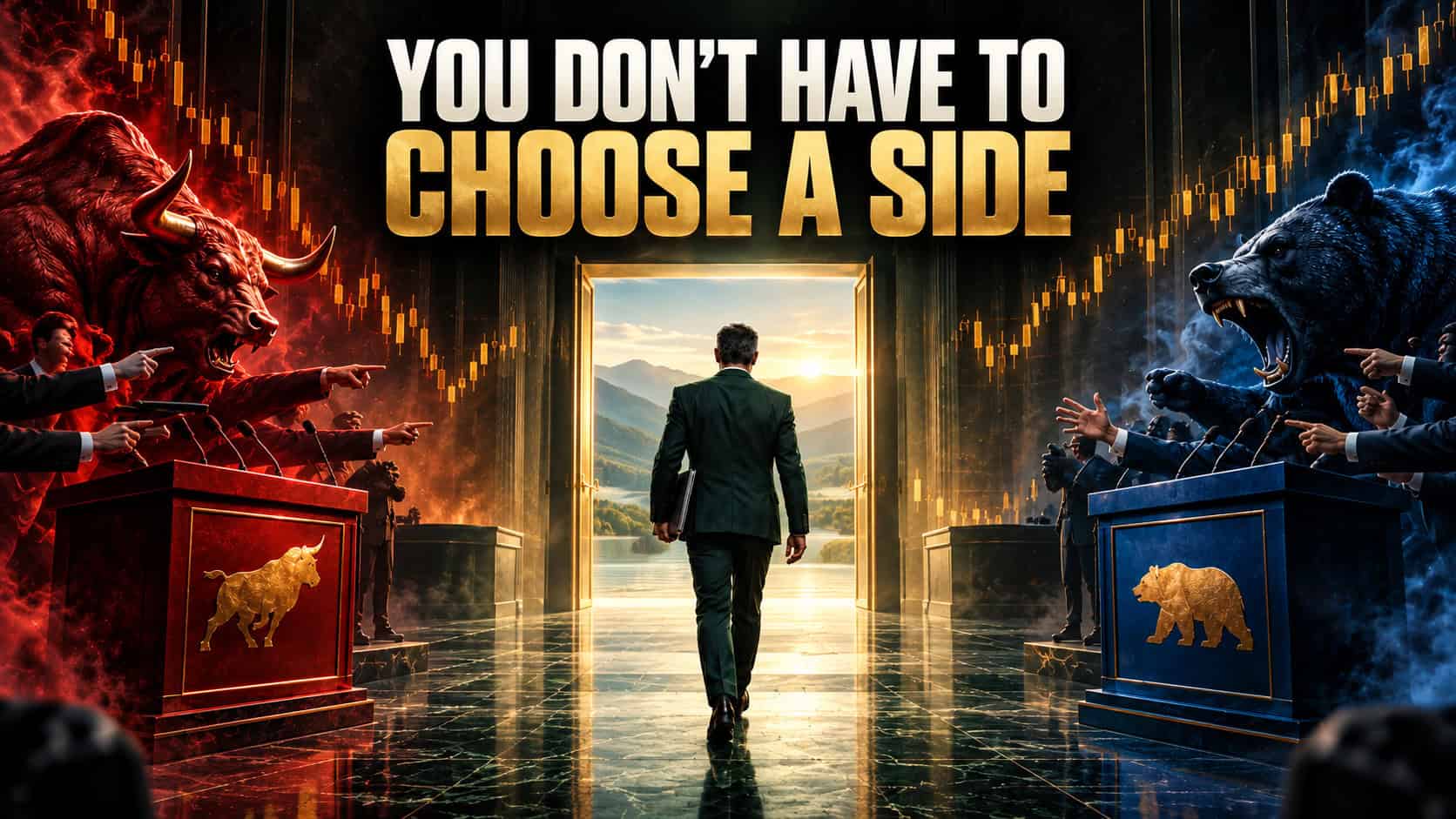
You must choose a side.
And this is not accidental.
For years, we have been trained—and manipulated—to believe that we must always choose the lesser evil.
You may not like either candidate, but you are told that you still have to vote for one of them. Otherwise, the worse one might win.
So, in the end, you are not voting for someone you believe in.
You are voting against someone you dislike even more.
And somehow, we brought the same mentality into trading.
I Closed My Short. That’s All.
I closed my Gold short earlier, and immediately people started asking whether I was bullish now.
No.
I closed my short.
That is the entire information.
It means I no longer wanted to hold that sell. It does not mean I suddenly love the long.
Maybe I don’t like either side at the current price.
Maybe I believe the short has already offered most of its potential, but the long is still not confirmed.
Maybe Gold is sitting in a zone where selling is late and buying is premature.
Or maybe the chart is simply a mess and I don’t want anything to do with it.
Unlike politics, trading gives me a wonderful option:
I can say, “Fuck both sides,” close the chart, and not trade.
I don’t have to choose the lesser evil.
I don’t have to buy a mediocre bullish setup simply because I no longer like the short.
And I don’t have to remain in a bad sell simply because the long looks even worse.
I can reject both.
The Need to Have an Opinion
This is where the real problem begins.
Traders believe they must always have an opinion.
Gold is going up or Gold is going down.
Bullish or bearish.
Buy or sell.
Then the opinion starts demanding a trade.
“I think Gold is bearish, so I should sell.”
The short stops looking attractive, so they close it. But now, because they are no longer bearish, they believe they must be bullish.
So they buy.
The bounce fails, they become bearish again and open another short.
In a few hours, they have changed sides three times and paid for every change of opinion.
That is how overtrading begins.
Not always from greed.
Not always from gambling.
Sometimes it begins with the apparently intelligent belief that you must always know where the market is going—and that you must put money behind every opinion.
But you don’t.
You can have an opinion and not trade it.
You can change your opinion without changing your position.
You can close a short without opening a long.
You can look at the chart and say:
“I don’t like the sell anymore, but the buy looks like shit too.”
This is a perfectly valid market analysis.
“Not Bearish” Does Not Automatically Mean “Bullish”
This should be obvious, but apparently it isn’t.
If I stop being bearish, it does not automatically mean I have become bullish.
Between bullish and bearish, there is a huge area called:
I don’t know.
Or:
I don’t care.
Or, even better:
Call me when there is a proper setup.
Maybe Gold still has another 1,000 pips to fall, but selling now would require a 2000-pip stop.
I may still believe it will fall, but I am not taking that trade.
Maybe Gold can bounce 800 pips from support, but the structure is still bearish and I have no logical place for my stop.
I may believe a bounce is possible, but I am not buying it.
This is not confusion…
This is the difference between having a market opinion and having a trade.
In Trading, You Are Allowed Not to Vote
In politics, they have taught us that refusing both options is irresponsible.
“You must vote.”
“You must stop the other candidate.”
“You must choose the lesser evil.”
In trading, choosing the lesser evil is still choosing a bad trade.
And a bad trade does not become good simply because the alternative is worse.
If the short is bad and the long is also bad, I don’t have to choose between them.
I keep my money.
This is the great advantage trading has over politics:
The market cannot force me to vote.
It can move without me.
Gold can rise 1,000 pips after I close my short.
It can fall another 1,000 pips without giving me a new entry.
I may miss the move completely.
So what?
Missing a move costs me nothing.
Choosing a bad trade because I felt compelled to participate can cost me real money.
You Are Not Paid for Having an Opinion
You are not paid because your analysis was correct.
You are not paid for being bullish before everybody else.
You are not paid for remaining loyal to the bears.
And you are certainly not paid for having an opinion about every candle.
You are paid when you take a good trade, manage the risk correctly, and make more when you are right than you lose when you are wrong.
That’s it.
I closed my Gold short.
Maybe I will buy later.
Maybe I will sell again.
Maybe I will do absolutely nothing.
I don’t have to choose a side simply because the market is open.
I don’t have to trade the lesser evil.
And I don’t have to replace one mediocre position with another just to feel that I am participating.
In politics, they may have convinced you that you must always choose between two bad options.
In trading, you can tell both candidates to go to hell—and keep your money.

You may also like