
What Are False Breakouts and How to Avoid Them?
Introduction: The Market Loves to Trick You First
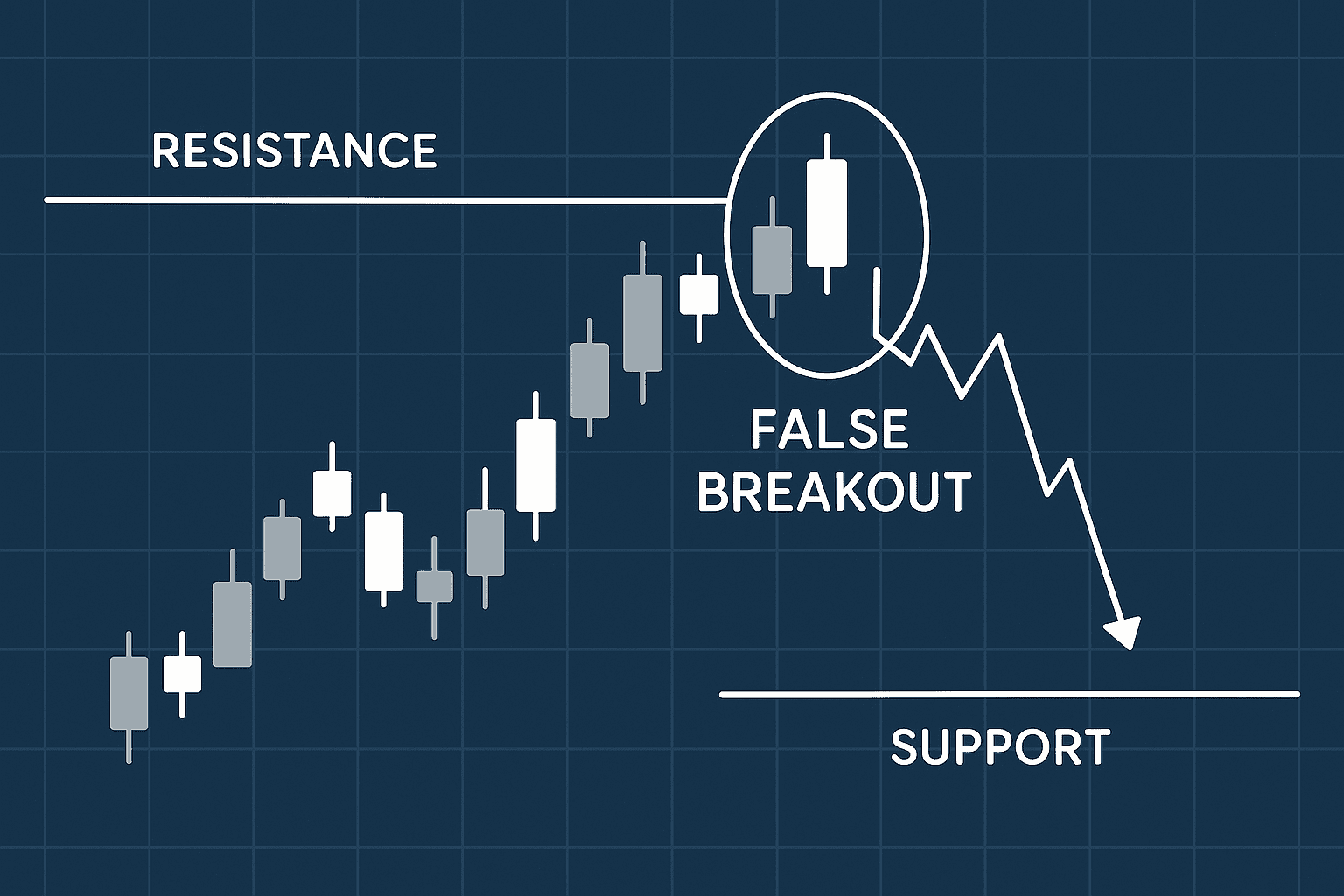
A false breakout happens when price temporarily breaks a key level — only to reverse quickly and trap traders on the wrong side.
If you’ve ever entered a breakout… and got stopped out right before the real move — you’ve seen a fakeout in action.
Let’s explore how to identify these traps and trade with more confidence.
1. What Is a False Breakout?
A false breakout occurs when:
- Price moves beyond support/resistance,
- But fails to hold above/below,
- And quickly snaps back inside the range or pattern.
📉 This is often caused by stop hunts, low liquidity, or news spikes.
2. Why False Breakouts Happen
- Market makers trigger stop losses
- Institutions test the level before entering real positions
- News releases create short-term volatility
- Impatient traders enter too early
⚠️ Gold (XAU/USD) is notorious for fakeouts — especially near round numbers like 1950, 2000.
3. Common Signs of a False Breakout
🔻 Fast rejection candle (pin bar, engulfing)
🔻 Breakout happens on low volume
🔻 Price closes back inside the range quickly
🔻 No follow-through after breakout — price stalls or reverses
🔻 Divergence between price and momentum indicators (e.g., RSI)
4. How to Avoid False Breakouts
✅ Wait for a candle close beyond the level, not just a wick
✅ Look for strong body and momentum
✅ Confirm with volume or breakout of structure
✅ Consider using retests before entry
✅ Use higher timeframes to validate breakout direction
💡 Patience is your best protection.
5. How to Trade False Breakouts Intentionally
Some experienced traders actually trade fakeouts:
- Identify a likely breakout zone
- Wait for a false move above/below
- Enter against the failed breakout
- Place stop outside the false break wick
🎯 This is called “fade the breakout” and works well in ranging or low-volume markets.
Conclusion: Don’t Get Baited by the First Move
False breakouts are common — especially in Forex and gold.
They’re not random — they’re engineered liquidity traps.
Once you recognize them, you stop falling for them… and start capitalizing on them.

You may also like
Time & Price Delivery: The IPDA Model in Practice

